A program chair at a home builders association has a harder job than most people realize.
You have a date on the calendar, a room that holds a couple of hundred people, a board that wants attendance up, and members who will decide within ten minutes whether this was worth leaving the jobsite for. Book the wrong speaker and you hear about it for a year. Book the right one and your spring event sells out on reputation alone.
I have spoken to rooms like yours and I have sat in them. Thirty years in residential construction, building and running trade businesses, serving production builders. What follows is the honest version of why associations book a construction keynote speaker, what separates a good booking from an expensive one, and exactly what should happen between the signed agreement and the applause.
What Is a Keynote Speaker, and What Is the Job Really?
The textbook answer
Ask what is a keynote speaker and you get a tidy definition. The keynote sets the theme of an event. It opens the program, frames the day, and gives everyone a shared reference point for the conversations that follow.
That is accurate and it is not very useful when you are choosing between three candidates.
The working answer
A keynote speaker for conference programming has one real job: make the room feel that the time was well spent, and give them something they can act on before the week is out.
For a general business audience that might be inspiration. For a room full of trade contractors who got up at five, drove in from a job, and are losing daylight by sitting there, inspiration alone is thin. They want something they can use. If they walk out with one change they can make to how they price, how they document, or how they talk to a builder, you have earned their attendance at the next one.
That is the bar in this industry, and it is higher than most speaking circuits.
Why Associations Book a Speaker in the First Place
Associations do not book speakers because the calendar has a slot. There is usually one of four pressures behind it.
Attendance has gone flat
Members stop coming when meetings feel like a formality. A named association keynote speaker on the invitation changes the open rate on your email and gives your board something to promote. The speaker is the reason to show up, and the networking is what members tell you they came for afterwards.
Members are struggling with something specific
Margins compressed. Labor costs moving. Payment terms getting worse across the market. When a problem is running through your membership, the right business keynote speaker names it from the stage and tells them what to do about it. That is worth more to a member than another market forecast.
Sponsors need value
Your suppliers and manufacturers are paying for visibility. A strong session gives them a full room to be visible in front of, and gives their own sales teams a reason to attend. A thin session hurts renewals, and sponsors notice.
Education requirements
Many chapters need to deliver member education, and a keynote that carries real content can anchor that obligation rather than sitting beside it.
The Case for a Speaker From Inside the Industry
Here is where I will be blunt, because it is the single biggest decision you make.
There is a whole market of speakers who will adapt a general business talk to your audience. They are polished, they are reliable, and they have a slide that says construction on it. Some of them are excellent.
But a room of builders and trade contractors can smell borrowed experience within about ninety seconds. The moment a speaker describes a jobsite in language nobody on a jobsite uses, you lose them. They will be polite. They will also be on their phones.
A construction industry keynote speaker who has actually run the work brings three things a generalist cannot.
Credibility that does not need to be claimed
When someone has priced a job, chased a change order, and stood in front of a builder explaining why the number moved, it shows in the first two minutes. They do not have to establish authority. They just talk, and the room recognizes one of their own.
Specificity
A generalist talks about communication. A construction leadership speaker talks about what happens when a superintendent finds out about a delay from the homeowner instead of from you. Same principle, completely different weight.
Language that fits
I walk a fine line in every session. I have to show a room that I know business and I know this industry, and I have to do it in the language the industry actually uses. I am not going to stand up there and talk like an MBA. Not only am I not one, it would not land. My competitors talk about their business schools and I think they genuinely do not understand what this audience needs.
It is not academic nonsense. That is the test I hold every session to.
What Topics Actually Work in These Rooms
Topics that work in construction industry events share one quality: they name a problem the room is already having and nobody talks about openly.
Where the profit is actually going
Most contractors are not losing money through lack of work. They lose it through operational leakage, in pricing, in the field, in paperwork nobody reads. This session goes through the places it drains from, and it tends to get the most conversation afterwards because people recognize their own business in it.
Why you are not losing the job on price
What builders actually buy, why a handful of subs get the work out of hundreds, and how to stop being compared on a number alone. Useful for a trade contractor audience and equally useful when builders are in the room, because it describes what they already do without saying out loud.
The contracts that quietly cost you
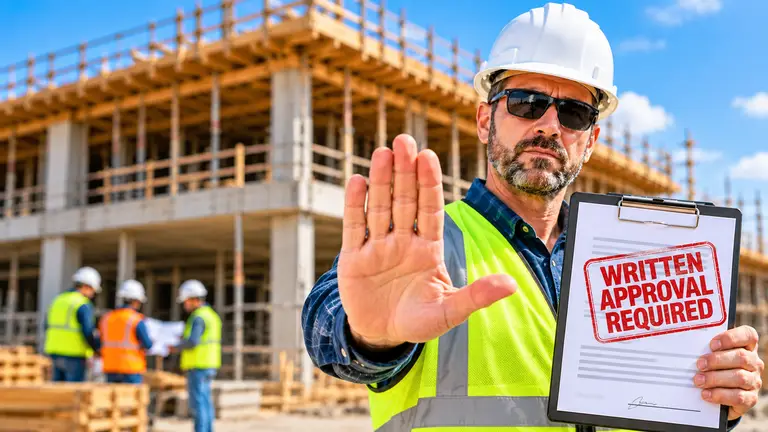
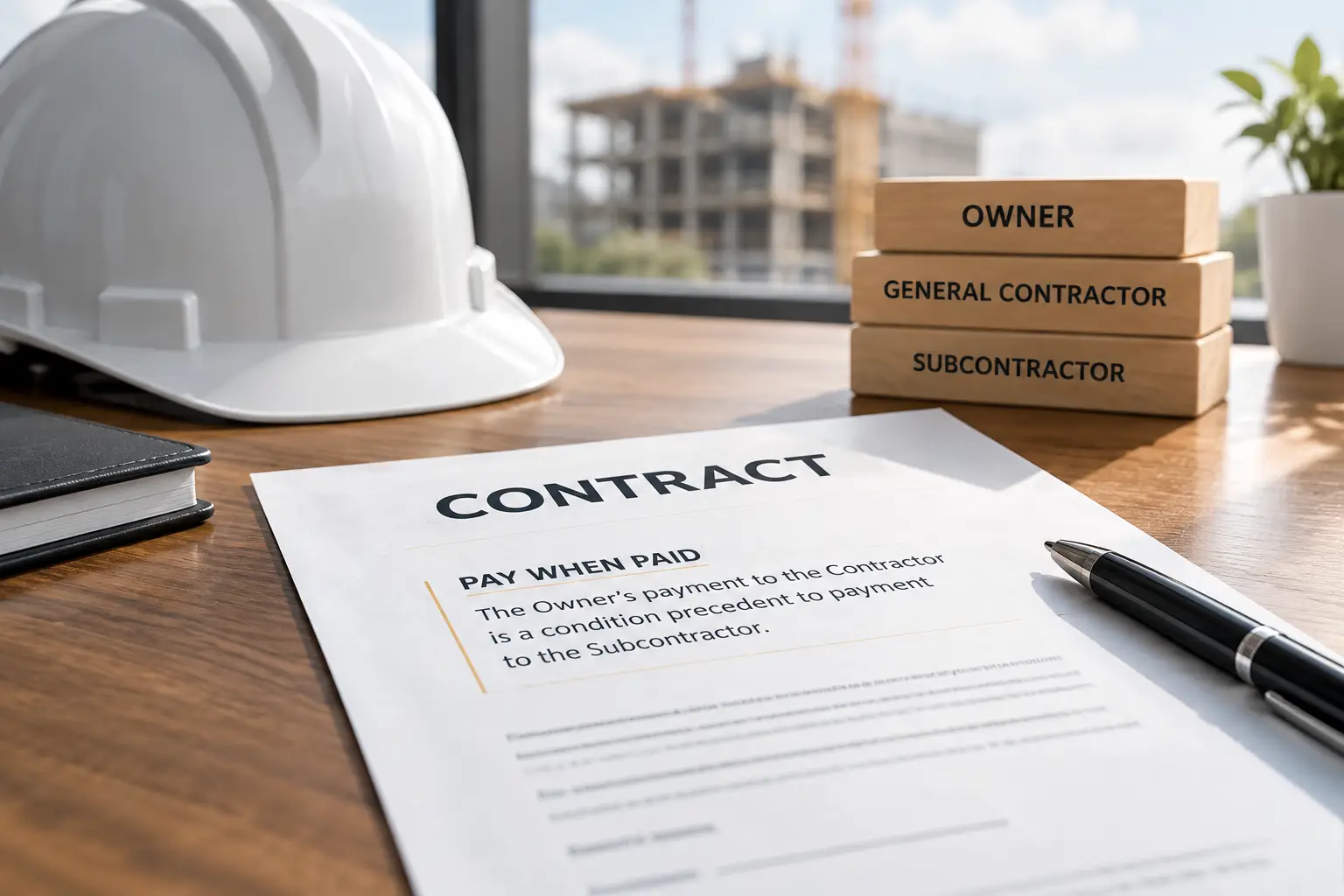
Pay when paid clauses, concealed conditions, verbal change orders. The fine print has taken down more trade businesses than bad estimating ever has. This one is sobering rather than fun, and members remember it.
The jobsite is your sales department
Every day in the field is an audition for the next job. What superintendents actually notice and why the company a builder never has to worry about keeps getting called. This one travels well as a shorter session.
Building a business that does not need you
Standards, accountability, and the handover problem. This fits construction business growth strategies programming and suits an owner heavy room, particularly where succession is on people’s minds.
A note on framing: a motivational keynote speaker and a leadership keynote speaker are usually marketed as separate categories. In this industry the distinction matters less than you would think. Leadership content lands as motivation when the room can see themselves in it. What does not work is motivation with nothing underneath it.
What to Expect From a Professional Keynote Speaker
A professional keynote speaker should make your job easier, not add to it. Here is the standard worth holding any candidate to.
Before the event
A call with you before anything is finalized. Who is in the room, owners or crews or a mix, how many, what they are dealing with this year, what your board wants out of the session. A speaker who skips this and sends you a topic list is going to deliver a generic talk.
Then the material gets shaped to your audience, not pulled off a shelf.
You should also receive, without having to chase it: approved biographies in short and long form, high resolution photography, a session description with learning outcomes you can put in your program, promotional copy your team can use as supplied, and audio visual requirements that should be simple. If a speaker needs a complicated technical setup for a chapter meeting, that is a warning sign.
On the day
Arrive early. Meet people before going on. Know the sponsors by name. Stay afterwards for the questions people would not ask from the floor, because those conversations are often where a member decides the association is worth their dues.
After the event
Follow up. Make the material available if you promised it. Be reachable for the member who emails a question three weeks later.
None of this is exotic. It is just professional conduct, and it is worth confirming before you sign rather than hoping for it afterwards.

Formats and Programming
Most chapters are working with a fixed slot, so the format usually picks itself.
A keynote runs 45 to 60 minutes and drives one idea hard. A breakout session takes a narrower topic into a smaller room with time for discussion. A half day workshop works the same material through properly with exercises people complete in the room. A panel or fireside format suits conference programming where you want several voices.
For builder conferences and multi day programs, pairing a main stage keynote with a breakout later in the day works well. The keynote earns attention and the breakout converts it into something members actually implement.
For builder networking events where the room is standing and the program is short, keep it to twenty or thirty minutes and pick one idea. Trying to cover a full framework in a networking slot serves nobody.
What Good Looks Like Afterwards
The measure is not applause in the room. It is what happens in the following weeks.
Members mention the session unprompted at the next meeting. Someone tells you they changed how they quote. Your sponsors ask about next year before you have to ask them. Attendance at the following event is higher than the one before.
Construction industry education that works does not feel like education while it is happening. It feels like someone finally said the thing everyone was thinking.
A Closing Thought for Program Chairs
One of the core beliefs I have developed in business is the old axiom that people do business with people they like. I do not care how good your product is, how good your service is, or how good your track record is. If you do not connect with the person in front of you, they are not buying.
That applies to a stage as much as it does to a sales call. The best speaker on paper is not the right speaker if the room does not warm to them in the first five minutes.
So before you book anyone, have the conversation. Ten or fifteen minutes on the phone will tell you more about whether a speaker fits your membership than any demo reel will.
And if someone is not the right fit for your audience, a speaker worth booking will tell you so.
Frequently Asked Questions
Compare traffic to conversion rate over 90 days. Healthy traffic with weak conversion points to CRO, since people are finding you and leaving for reasons you can test and fix. Weak traffic combined with slow mobile load times, a navigation that no longer matches your services, and a site nobody can edit points to a redesign. When both look bad, run the CRO audit first so the rebuild has evidence behind it.
A focused audit on a mid-sized site usually takes two to three weeks. You should receive a funnel breakdown showing where visitors drop out, session recording findings, page-level performance data, a prioritised list of fixes ranked by expected impact and effort, and a testing roadmap. If an audit comes back as general advice with no page-level numbers, it is not an audit.
As a rough guide, a page needs a few hundred conversions per month for a test to reach significance in a reasonable window. Below that, testing takes months and the results stay noisy. Lower-traffic sites get more from direct fixes based on recordings and user feedback, plus qualitative research, than from split tests.
It can, and most of the damage is avoidable. Rankings drop when URLs change without redirects, when content gets trimmed during the rebuild, or when the new site loads slower than the old one. Map every existing URL to its new destination before launch, keep the content depth on pages that rank, and benchmark Core Web Vitals before and after. Expect some fluctuation for four to eight weeks even when everything is done properly.
Start with the conversion point. Shorten forms to the fields you genuinely need, put proof near the call to action, make the primary action obvious on every page, and match landing page copy to the ad or search query that brought the visitor. Then fix mobile load speed. These changes usually move numbers before anyone touches the layout.
A UX audit looks at usability across the whole experience, including navigation, accessibility, and task completion. A CRO audit is narrower and commercial, focused on the path to a conversion and the specific points where revenue leaks. They overlap, and good practitioners run both, but if you only buy one, buy the CRO audit when leads are the problem.